You run a business.
Not a marketing department.
You didn't build your company by studying conversion funnels or audience segmentation. You built it on product quality, client relationships, and commercial instinct. That's exactly the point.
Marketing requires a different kind of expertise. Not better judgement, but different judgement. I provide the senior commercial thinking your business needs, without requiring you to become a marketer yourself.
Start the intake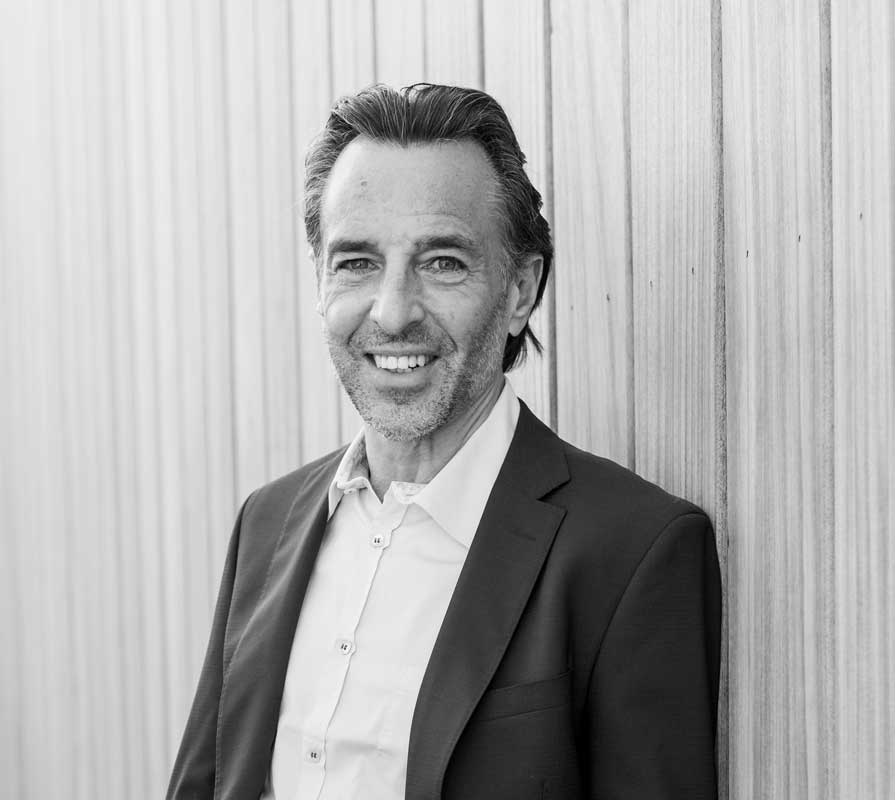
Marc Wajsberg · Senior Marketing Strategist
Details and references available on request. Selected engagements are confidential by default.
Your marketing isn't broken.
The job is.
Most business leaders I meet have already tried the obvious things. A marketing manager. An agency. A freelancer or two. The activity goes up. The revenue doesn't follow.
The reason isn't effort. It's that nobody was asked to make the decision underneath it.
Marketing at the level you need it draws on several distinct kinds of thinking: commercial judgement, channel expertise, writing, and measurement. Those are real specialisms and good people hold them. The question is not whether they exist. It's who was given the mandate to decide what all of them are aiming at — who you're really for, what you actually sell, what makes you worth choosing, and how you'd know whether any of it is working.
In most businesses, nobody was. The marketing manager was hired to run things. The agency was briefed on execution. The freelancer was given a scope. Each of them does their part competently, and the parts are still aimed at an assumption nobody examined.
That decision is the part I take. I don't produce the execution — your team or your suppliers do that, and I direct and review it. What I'm accountable for is whether the decisions underneath the work are the right ones, and whether anyone can tell.
"Over the course of my career, I've come across plenty of marketing specialists. Marc is the first who actually sounds like a businessman, not a vague consultant full of empty talk."
Philippe Criel · CFO Centre BelgiumWhat this is. What this isn't.
I don't sell a methodology, a proprietary framework, or a certification programme. I sell clarity. The kind that makes a business easier to understand, easier to trust, and easier to choose.
What I do
- Audit and rebuild your positioning so it holds under competitive pressure
- Design offer structures that are easy to buy
- Build message architecture grounded in buyer psychology
- Direct and review the work your team or your suppliers execute
- Establish measurement that connects to pipeline and revenue
- Say plainly when the decision is made and the ongoing work should stop
What I don't do
- Promise fast results without evidence
- Produce the execution myself — campaigns, pages, photography
- Produce reports filled with impressions and click-through rates
- Use marketing language when business language is clearer
- Present dashboards designed to look good instead of be honest
- Hand over a document and leave you to work out what it means
On buying one piece rather than a relationship: you can buy the Commercial Diagnostic on its own and implement the roadmap with your own team or your own suppliers. It is written to be acted on without me. Ongoing commercial leadership is a separate engagement, taken up only when it's genuinely the right thing — and I'll tell you when it stops being that.
Don't engage me if any of these are true.
- No one can make decisions. Positioning and offer calls that keep getting postponed make execution drift. I build clarity. I cannot substitute for decision authority.
- No internal owner exists. Strategy without ownership becomes a document. Documents do not close deals.
- Nobody can execute. I direct and review the work; I don't produce it. If you have neither an internal team nor suppliers you trust, that gap needs solving before this is worth starting.
- Measurement is political. If revenue truth cannot be surfaced without internal friction, nothing improves. I measure what the numbers say, not what the room prefers.
Why people buy what they buy. And how that shapes every commercial decision.
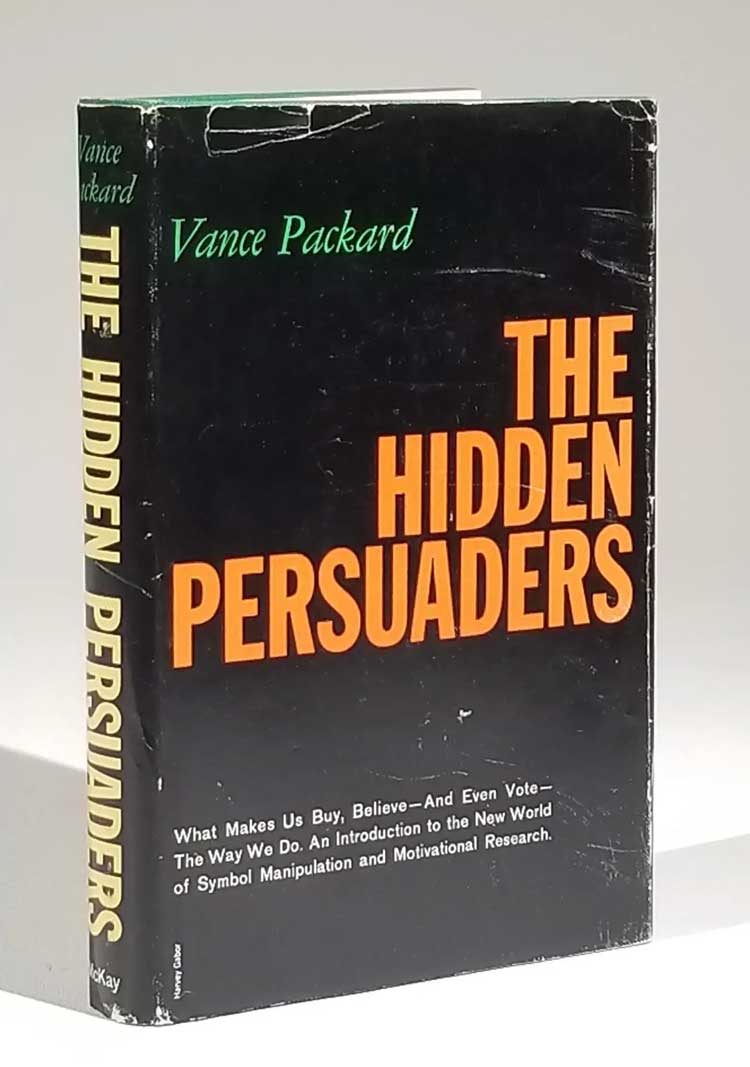
The book that started everything. Age 17.
I came back from a hospital visit at seventeen with a copy of The Hidden Persuaders by Vance Packard. It explained that buyers don't choose products. They interpret signals, decide who to trust, and justify the choice they were already leaning toward. Thirty years later, that's still the question driving every recommendation I make: what is your buyer actually doing in their head, and is your marketing built around that or against it?
The work since has spanned Unilever, high-end retail, and digital — one of the first Belgian advertisers on Google Ads in April 2003, when most still called it a hype. Different industries, same buyer logic. How people interpret, trust, and justify their commercial choices hasn't changed since Vance Packard described it in 1957.
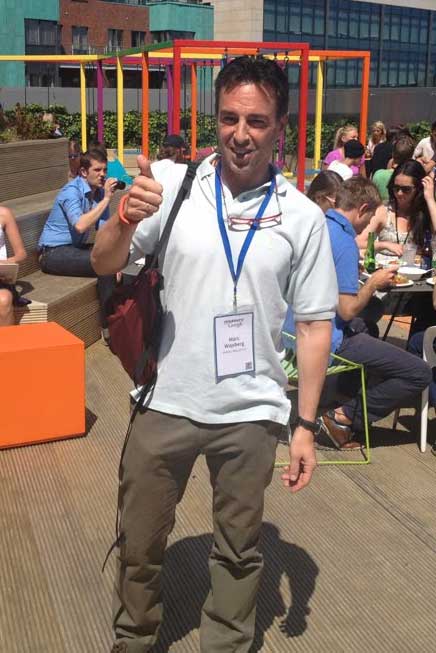
Google HQ, Dublin, June 2013. One of several invitations from Google.
Google invited me multiple times to their European headquarters in Dublin, alongside roughly a dozen agency leaders from the Benelux. I was the only solo operator in the room. They never told me why I'd been selected — but the company they chose to put me in spoke for itself.
Recognition by those who've seen the work.
"I was not supposed to tell him this, but a few years ago the CEO of Google Belgium said to me: if you ever need someone who truly understands how online marketing works, call Marc."
Jorg Snoeck Founder, RetailDetail"Working with Marc is like driving with a V12 on kerosene. A virtuoso in digital marketing, much better than most digital natives."
Erik Saelens CEO, Brandhome and Unbox"Marc combines two worlds you rarely see together: old-school marketing, empathy and psychology, and extremely deep technical knowledge."
Ziv Knoll Board Member, Antwerp Diamond BourseIndustries don't change the logic. They change the language.
The underlying commercial problems repeat across sectors. Audience choice, positioning, offer design, measurement — these don't change between industries. What changes is the vocabulary, the buying cycle, and the regulatory frame. I learn those fast. The list below is where that work has already happened.
Not a pitch. A conversation.
If your marketing feels like a cost centre instead of a commercial system, we should talk. No decks. No proposals. A direct conversation about what you're dealing with and whether I can help.
Start the intakeWhat happens next:
1) You answer seven questions plus your contact details (about ten minutes).
2) I reply personally within 2 business days.
3) If there's a fit: one working conversation at no cost to you, where you get my initial read on where the problem sits.